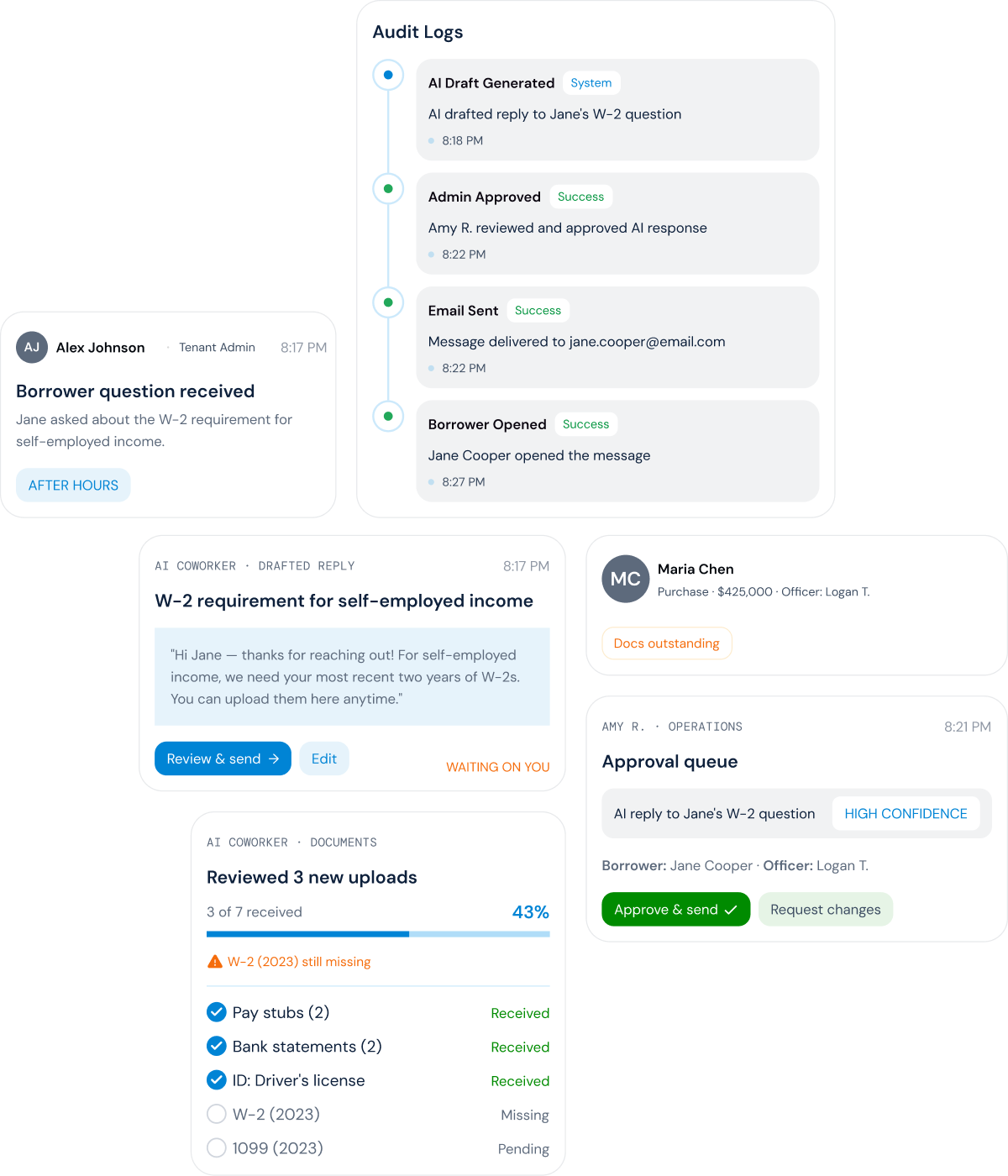
Our AI crew works both sides of the hand-off, engaging new leads the moment they arrive, then collecting and reviewing documents once the file is open. All inside the same system your team already uses. The platform is built, and your admin approves every agent before it starts work.
We’re onboarding the first 10 mortgage teams into Early Access.
Reduce fallout
Improve visibility
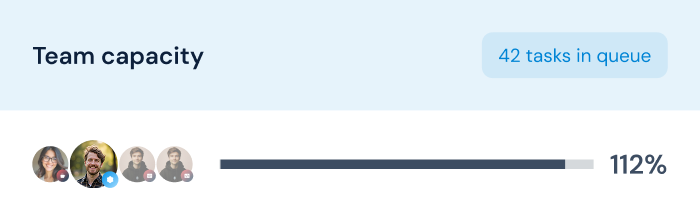
Create team capacity
Closings are fast when nothing is waiting. Most files don’t stall in underwriting. They stall on one missing document and one unreturned question — over and over, across every file in the pipeline.
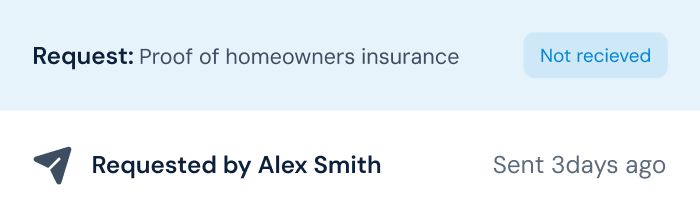
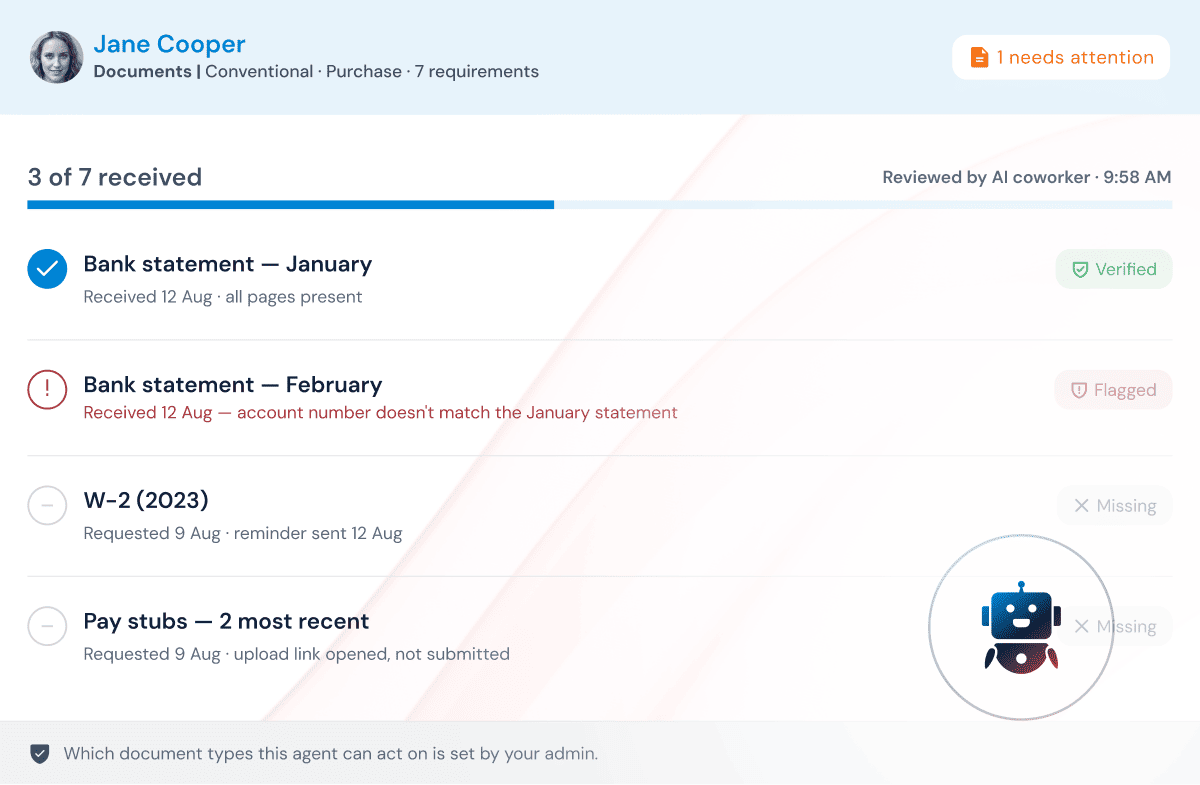
A request goes out for a pay stub, a bank statement, a letter of explanation; half of it uploads, or none of it does. Someone has to notice, and then chase – again Thursday, again Monday.
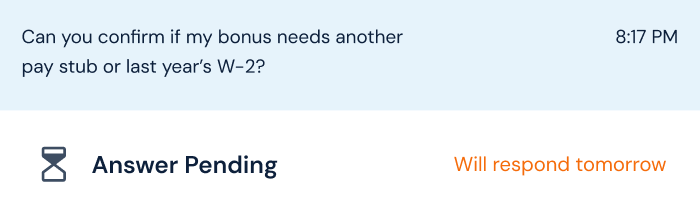
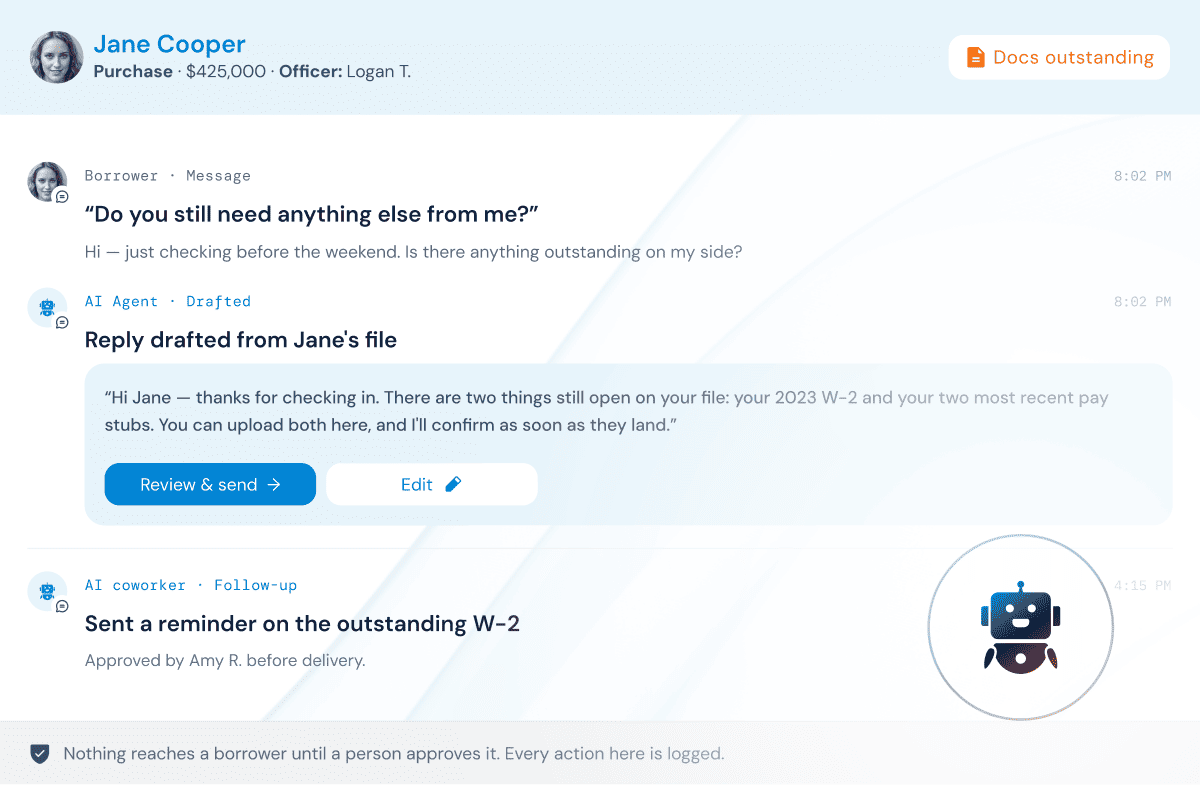
A borrower asks something at 8pm. It’s a two-line answer, and nobody sees it until morning; the file loses a day it didn’t need to lose.
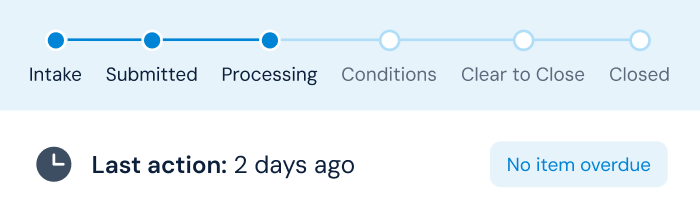
Nothing is overdue enough to flag, so nothing flags it. It just drifts a little further behind each week, until it’s the file everyone assumed someone else was watching.
The work doesn’t disappear when a file changes hands. It lands in the inbox of whoever’s already busiest, and waits its turn behind everything they haven’t gotten to yet.
None of this is a work problem. It’s a capacity problem and it repeats on every borrower’s file in your pipeline.
Not a roadmap. Both are built and in final testing before they go to work on live files. Everything further down this page is marked in development, because you shouldn’t have to guess which is which.
What it’s for
New enquiries don’t arrive when your team has time to answer them; and the first reply is the one that decides whether they keep talking to you.
What it does
Picks up a new lead the moment it arrives and answers from your own knowledge base, not a generic script. Keeps building context on that lead with every exchange, so nothing has to be asked twice. Stays with them until they become a customer, then hands over.
What Stays Yours
You decide at hire whether it sends on its own or drafts for a person to approve, and you can change that later. Every message it sends is logged.
What it’s for
Document work is where files go quiet.
What it does
Requests what’s missing, tracks what’s arrived, reviews what comes in against what the file actually needs, and flags the gap before someone discovers it three days later.
What Stays Yours
Which document types it can act on — and what it may do without a person — are set by your admin.
Nobody on your team can switch on an AI agent by themselves. That’s the point.
A loan officer asks for an agent. That is as far as their authority goes.
Your admin reviews the scope and approves the hire. Billing does not start before that approval.
configured at hire, changeable later; including whether it sends on its own or drafts for a person to approve.
Every action is recorded: who or what did it, when, on which borrower, and what changed.
We’re listing few of them because the first ten teams get a say in which one ships next, not because you can use them now.
Prepare the file before it reaches underwriting: income and DTI review, missing conditions, readiness signals. Support for underwriting, not underwriting decisions.
Appointments, closing coordination, and the realtor and title back-and-forth that eats a coordinator’s afternoon.
Consent status, disclosure gaps, policy conflicts, and audit trails across everything the other agents do.
Loan matching and payment comparisons. We’ll say more about this one when that review is complete.
The Night Shift Crew
Five smaller agents, each waking only when something happens, a lead arrives, a document lands, a deadline drifts, instead of one broad agent doing everything. These are concept agents; We’re showing it because Early Access teams help shape what actually gets built next.
The first reply to a brand-new lead, day or night; drafted from your knowledge base, with a call booked on the right calendar before the moment goes cold.
Walks a borrower through the application at their own pace over text, writing each answer into the file as it comes in; so what reaches you is organized, not a blank form.
eads what comes in against what the file still needs, and asks again for exactly what’s missing, the same job as Document Intelligence, on a faster, event-driven path.
A daily read of the whole pipeline, ranked by what’s closest to missing its window, so a file that’s quietly drifting gets caught before it’s actually late.
Picks up the text, the email, the voicemail the moment it lands, answers what’s routine from the live pipeline, and hands anyone who needs a person straight to one.
Ten mortgage teams. Founding pricing in writing, onboarding from the people who build it, and a real say in which agent ships next.
What you get
What we ask
If you’re unable to submit the form, you can still contact the Muvix team by email or phone.
Early access teams get founding pricing, agreed in writing before you commit to anything. Nothing is charged while we work out whether it’s a fit, and no agent is ever billed until your admin approves the hire.
The platform is built. Borrower records, document handling, the approval workflow and audit logging are built and working today. What’s still growing is the agent workforce, two agents are built and in final testing, more agents are in development, and early access teams get a say in which one ships next.

There’s no LOS integration today. If that’s a day-one requirement, we’re not the right fit yet — tell us what you use on the form and we’ll be straight with you about where it sits.
In your own workspace. You own it. It isn’t shared across customers and it isn’t sold. Documents move through secure, time-limited upload links.